




















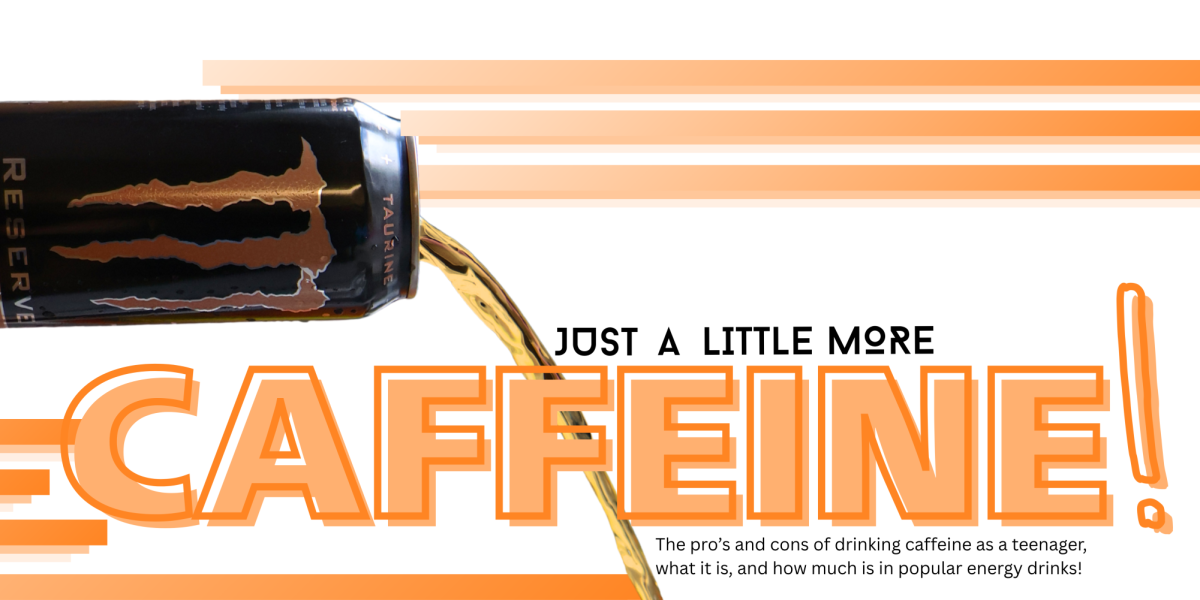
Energy drinks are a common appearance in everyday school life. Maybe you chug one down to finish a project, late night gaming session or you drink it just to get through the day. Caffeine is the chemical, or drug, that is found in those drinks. It has its upsides, that rush of energy, the lack of fatigue. You feel like you are on top of the world.
What is caffeine?
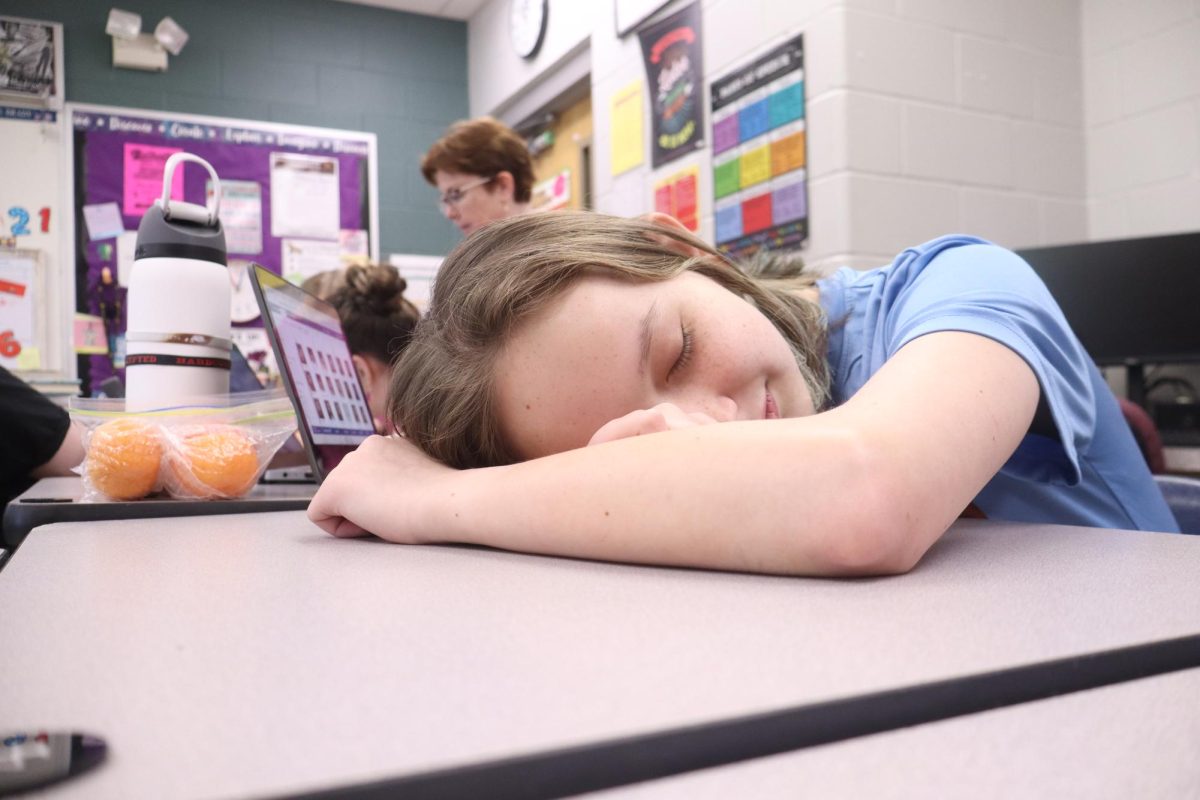
Caffeine is a drug that stimulates the brain and the nervous system. It projects the feeling of being more alert, allowing you to focus more, and get more things done. These are the pros of drinking caffeine, and that is in moderation. If you drink it excessively, you will discover the downsides of it, and how it can affect mental, and physical health. You will feel jittery, your blood pressure will rise, and your heart will start pumping blood faster. Caffeine itself doesn’t get rid of your fatigue, it temporarily blocks the chemicals that produce that “tired” feeling. Like a drug, caffeine can be addictive, and lead to teens being dependent on it. It can affect their sleep, certain aspects of mental health, and can cause you to feel jittery, nervous, anxious or cause headaches. It can also lead to overdoses, physical health issues, such as heart diseases, or cause a heart attack due to the stress it puts on your body.
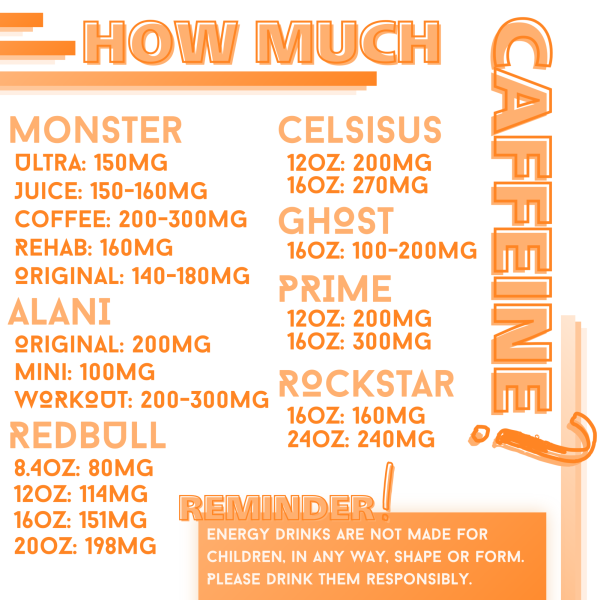 What is the average dosage of caffeine teens intake v. the suggested amount?
Often, teenagers can drink a full can of Monster, Alani, or Redbull daily, bi-daily, or multiple drinks daily! These companies thrive off people needing that short boost, and the sleep deprivation of teens. The daily amount of caffeine a teen should have daily, is much lower than that of an Alani, or monster. Teens should stay within the limit of less than 100mg of caffeine per day. While it is fine to go above that limit, having one monster daily, or an Alani can cause serious health problems.
The unfortunate truth is that teenagers have been killed from caffeine overdoses; it’s rare, but it happens. Caffeine is still a drug, and you are able to overdose on it if you drink it too often. This was the unfortunate truth for Larissa Nicole Rodriguez, who died from an overdose. She was healthy, with no apparent health problems, active, bright and loving.
You need to be careful drinking energy drinks, and having an awareness of how much caffeine you are taking in daily. Common foods that contain caffeine are coffee, tea, chocolate, and soda. Tea and coffee are healthier choices for caffeine intake, but when drinking an energy drink, pay mind if you drink tea, eat chocolate or drink another soda later in the day.